
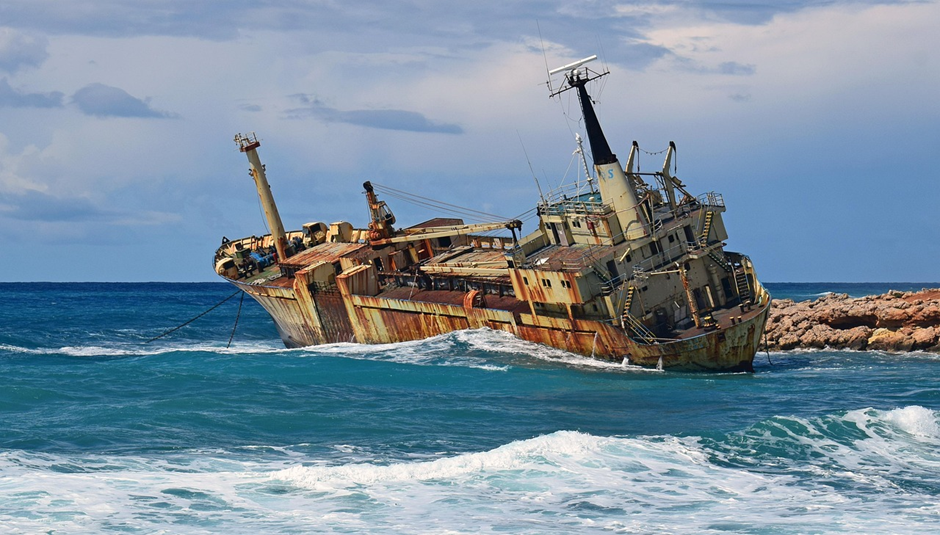
Any person who discovers a wreck is required, insofar as this is possible, to make it safe, and in particular to place it out of the reach of the sea. Within forty-eight hours of discovery, or of arrival at the first port if the wreck was found at sea, he must declare it to the competent maritime authority.
Wrecks are placed under the protection and safeguard of the competent maritime authority, which takes all necessary measures for salvage and ensures the preservation of salvaged objects.
These objects remain at the risk of their owners; their deterioration, alteration or damage, alteration or loss shall not give rise to any claim for damages, whatever the cause. The competent maritime authority may, for the purpose of salvage and in return for compensation natural or legal person capable of participating, as well as all means of transport and stores. For the same purpose, it can give orders to occupy or cross private property.
If the owner is present or represented and claims his rights to the wreck, the competent maritime authority may only proceed with salvage in the following cases and subject to the provisions of article 228 of the code:
- After formal notice has been served on the owner, with no response within the allotted time, if the wreck constitutes an obstacle to navigation or fishing or a threat to the environment, or if recovery is in the public interest and urgently required urgency;
- At the owner’s request, if the owner has no means of salvage and if urgent action is required to avoid depreciation or loss of the wreck.
Operations are carried out at the owner’s risk and expense.
When the wreck, grounded or sunk, forms an obstacle in a port, at the entrance to a port, in an access channel or in a roadstead, and only in this case, the port authority, after having informed the competent maritime authority, gives formal notice to the owner to proceed with the raising or demolition of the wreck and sets the deadlines for the commencement and completion of the work.
In all cases where the owner of the wreck is unknown, or refuses or neglects to carry out the work, or fails to meet the deadlines set for completion, the port authority may carry out the work itself, at the owner’s expense and risk.
In the cases referred to above, as well as for any damage caused by the seagoing vessel to the works of the ports, basins and waterways, the owner cannot be released from his obligations by abandoning the vessel and cargo. However, he may request the shipowner’s liability in accordance with the provisions of the International Convention on Limitation of Liability for Maritime Claims signed in London on November 19, 1976.
The discovery or salvage of a wreck whose owner is unknown is publicized by the competent maritime authority in the form of posters or insertion in the press.
When the owner is known, notification is made to the owner if he is a national of a C.E.M.A.C. member state, or to the consul or diplomatic representative of his or her country if he or she is not a national of a C.E.M.A.C. member state.
Except in the cases referred to in articles 232 and 233 of the code, the owner has a period of three months from the date of publication or notification to claim the wreck and, if salvage has been to declare that he intends to salvage the wreck.
When work is required to refloat or skin the wreck, the competent maritime authority, taking into account the situation of the wreck and the difficulty of the operation, will set the owner a time limit within which the work must be undertaken and completed.
If the work has not been started or completed within the allotted time, the competent authority may declare that the rights of the owner of the wreck have lapsed.

Add comment