

Certain claims are subject to limitation, whether the liability arises in contract, tort or by statute and whether they are enforced by personal action against the owner or other person or against the ship.
Such claims will be subject to limitation of liability even if brought by way of recourse or for indemnity under a contract.
Loss of life, personal injury, loss of or damage to property claims, as well as consequential losses, are all subject to limitation provided that they occur either on board or in direct connection with the operation of the ship or a salvage operation.
While damage on board is rather well defined, the extent of the term “direct connection with the operation of the ship” is not as easy to determine. The term expresses the “necessary linkage” between the loss suffered and “the ship in respect of which a claim is made”. However, it is unclear which damage and when is in direct connection with the ship’s operation.
In The Aegean Sea destruction of the bunkers, pollution damage and clean- up costs arising from the grounding of a vessel on rocks because of the breach of a safe port warranty under an ASBATANKVOY charterparty were also “in direct connection with the operation of the ship”.
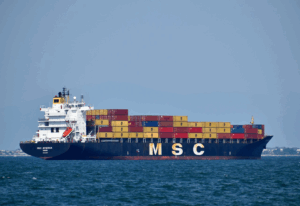
In The CMA Djakarta cargo claims arising from the shipment of undeclared dangerous goods under a charterparty were also considered to be “in direct connection with the operation of the ship” and thus subject to limitation.
Claims in respect of loss resulting from delay in the carriage by sea of cargo, passengers or their luggage are also subject to limitation of liability. Because there is no definition of luggage, the word arguably encompasses in its ordinary meaning all types of luggage including valuables.
Claims in respect of other loss resulting from infringement of rights other than contractual rights, occurring in direct connection with the operation of the ship or salvage operations are also subject to limitation of liability.
Claims in respect of the raising, removal, destruction or the rendering harmless of a ship which is sunk, wrecked, stranded or abandoned, including anything that is or has been on board such ship are also subject to limitation of liability. Claims for wreck raising, removal, etc., differ from other property and consequential claims in the sense that the party claiming could be under a duty to keep the waterways clear of objects and therefore public funding will probably have to meet the costs that exceed limitation.
Claims in respect of removal, destruction or rendering harmless of the cargo of a ship are subject to limitation of liability. This section concerns cargo- related operations in general irrespective of whether the ship is distressed or sunk. It could, for example, cover a claim by cargo owners for the jettison or confiscation of cargo partly infected which makes discharge of the whole cargo, whether infected or not, illegal. It would also cover the destruction or raising of a container with toxic substances lost to the sea.
Claims of a person other than the person liable in respect of measures taken in order to avert or minimise loss for which the person liable may limit his liability. These claims are, in essence, assistance services and clean- up costs undertaken by persons who cannot be considered as salvors. This avoids the situation by which a claim would be limited but the claim for prevention of the loss would be unlimited.
Therefore, contractors undertaking cargo or ship raising otherwise than in salvage or acting for the minimization of loss under a contract do not face a defense of limitation when demanding payment. However, it appears that it is only in respect of remuneration that such claims are unlimited.





Add comment