

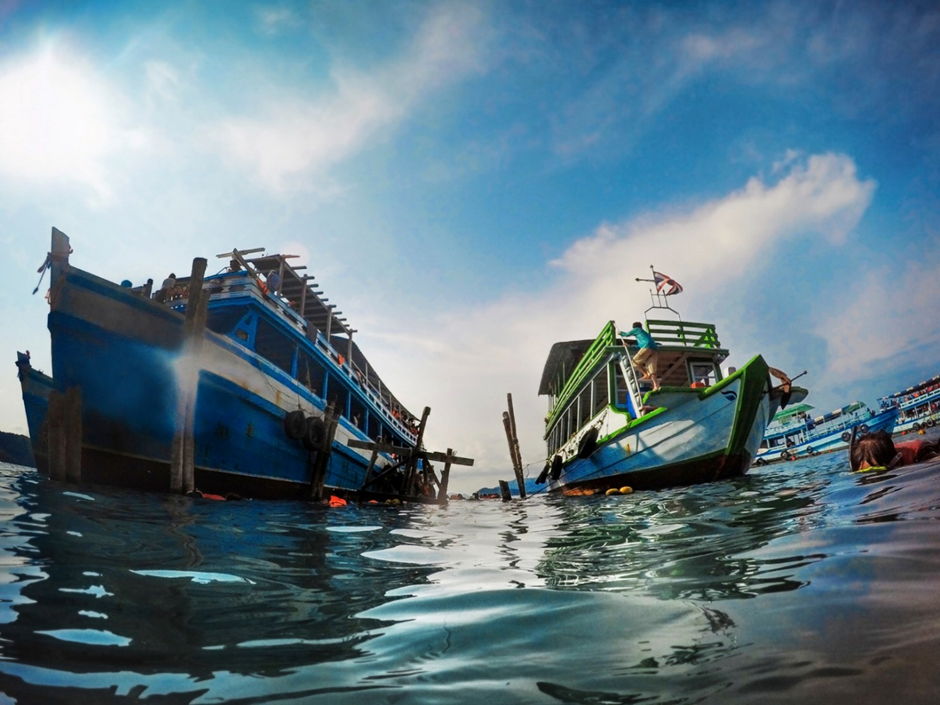
Collision is any collision between inland navigation vessels and/or boats regardless of the nature and conditions of the water.
In the event of a collision, compensation for damage caused to vessels, property or persons on board shall be paid in accordance with the provisions of the law.
All floating craft, with the exception of those moored in a fixed position, are assimilated, vessels or inland waterway vessels, as the case may be, for the purposes of the preceding paragraph.
If the collision is fortuitous, due to force majeure or if there is any doubt as to the causes of the accident, the damages are borne by those who have suffered them, without distinction as to the cause of the accident, the damages are borne by those who suffered them, without distinguishing the case if either or both ships were at anchor at the time of the collision.
If the collision is caused by the proven fault of one of the vessels, compensation for damage is the responsibility of the party at fault.
In the event of joint fault, the liability of each of the vessels is proportional to the seriousness of their respective faults. However, if, under the circumstances, the proportion cannot be established, or if the faults appear to be equivalent, liability is responsibility is shared equally.
Damage to the ship, cargo, effects or other property of crew, passengers or other persons on board, shall be borne by the ships at fault in the said proportion, without joint and several liability to third parties.
Vessels at fault are jointly and severally liable to third parties for damage caused by death or injury, subject to recourse by the party who has paid a greater share than that which, in accordance with the preceding paragraph, he should definitively bear.
The liability established by the preceding articles shall continue to apply in the event of a collision caused by the fault of a pilot, even when pilotage is compulsory.
The foregoing provisions do not apply to compensation for damage caused by either through the execution or omission of a manoeuvre, or through failure to comply with regulations, a vessel caused, either to another ship, or to things or persons on board, even if there had been no collision. even if there had been no collision.
Claims for damages are time-barred after two years from the date of the event.
The time limit for recourse actions under article 170 paragraph 3 of the code is one year from the date of payment. These limitation periods do not run when the vessel could not be seized in waters under the jurisdiction of a C.E.M.A.C member state.
The provisions above, with the exception of the last provision of article 173 of the code, are also applicable to seagoing vessels and inland waterway vessels assigned to a public service.

Add comment